ABSTRACT
OBJECTIVES: to map existing scientific evidence on the use of echocardiography with the Speckle Tracking (STE) technique in pregnant women with preeclampsia (PE), compared to normotensive pregnant women.
METHODS: this scoping review was conducted following the PRISMA-ScR (Preferred Reporting Items for Systematic Reviews and Meta-Analyses Extension for Scoping Reviews) guidelines and the Joanna Briggs Institute methodology. The research protocol was registered in the Open Science Framework. Searches were performed in PubMed, Embase, Web of Science, BVS, and the Cochrane Database of Systematic Reviews, as well as in the gray literature via Google Scholar. Two independent reviewers selected the articles based on inclusion criteria, resulting in 12 studies.
RESULTS: in total, the studies analyzed included 951 pregnant women (473 with PE and 478 controls). Most studies reported less negative Global Longitudinal Strain (GLS) values in women with PE (mean of -17%) compared to normotensive controls (mean of -20%), suggesting subclinical cardiac dysfunction in the PE group.
CONCLUSION: these findings highlight the potential of STE to detect early myocardial changes in preeclampsia, even before a reduction in the left ventricular ejection fraction. Further research is needed to explore the systematic use of STE in high-risk prenatal care to promote maternal cardiovascular health.
Keywords:
Preeclampsia, Global longitudinal strain, Echocardiography
RESUMO
OBJETIVOS: mapear as evidências científicas sobre o uso do ecocardiograma com Strain pela técnica Speckle Tracking em gestantes com pré-eclâmpsia, comparando-as com gestantes normotensas.
MÉTODOS: trata-se de uma revisão de escopo conduzida de acordo com as diretrizes PRISMA-ScR (Preferred Reporting Items for Systematic Reviews and Meta-Analyses Extension for Scoping Reviews) e seguindo a metodologia do Instituto Joanna Briggs. O protocolo foi registrado na Open Science Framework. Foram pesquisadas as bases PubMed, Embase, Web of Science, BVS e Cochrane Database of Systematic Reviews, além de literatura cinzenta no Google Acadêmico. Dois revisores independentes selecionaram artigos com base em critérios de inclusão, resultando em 12 estudos incluídos.
RESULTADOS: os estudos analisados totalizaram 951 gestantes (473 com PE e 478 controles). A maioria relatou valores de Global Longitudinal Strain menos negativos em gestantes com pré-eclâmpsia (média de -17%) em comparação às normotensas (média de -20%), sugerindo disfunção cardíaca subclínica associada à PE.
CONCLUSÃO: os achados indicam que o Speckle Tracking pode detectar precocemente alterações miocárdicas em gestantes com pré-eclâmpsia, antes mesmo de uma redução na fração de ejeção. Esses resultados reforçam a importância de pesquisas adicionais que avaliem a inclusão sistemática do Speckle Tracking no acompanhamento pré-natal de alto risco, visando à promoção da saúde cardiovascular materna.
Palavras-chave:
Pré-eclâmpsia, Global longitudinal strain, Ecocardiografia
IntroductionHypertensive disorders of pregnancy (HDP) represent an important risk factor for the development of long-term cardiovascular disease (CVD),
1 with pregnancy providing a window of opportunity to assess maternal cardiac health. The physiological overload imposed on the cardiovascular system during pregnancy allows for the early identification of cardiac changes, especially in the presence of hypertensive conditions.
1Among HDP, preeclampsia (PE) has the most significant impact on the cardiovascular system, substantially increasing the incidence of CVD in complicated pregnancies by PE compared to those marked by gestational hypertension (GH) or chronic hypertension (CH), as documented in recent systematic reviews and meta-analyses.
1-4 In a normotensive pregnancy, physiological adaptations such as vasodilation, reduced systemic vascular resistance, and increased heart rate and cardiac output are expected,
5 as seen in Figure 1. In preeclampsia, however, an altered hemodynamic profile is observed, with an inability to increase cardiac output and a failure to induce the natural decrease in vascular resistance,
5-7 especially in cases of early onset (diagnosed before 34 weeks of gestation).
A recent integrative review on the prevalence of preeclampsia in Brazil, including 52,986 women, showed that the frequency of preeclampsia ranged from 1.7% to 6.2%, this result was similar to the international studies. However, over the last few years, possibly reflecting the adoption of new diagnostic criteria, these values have been increasing in the country.
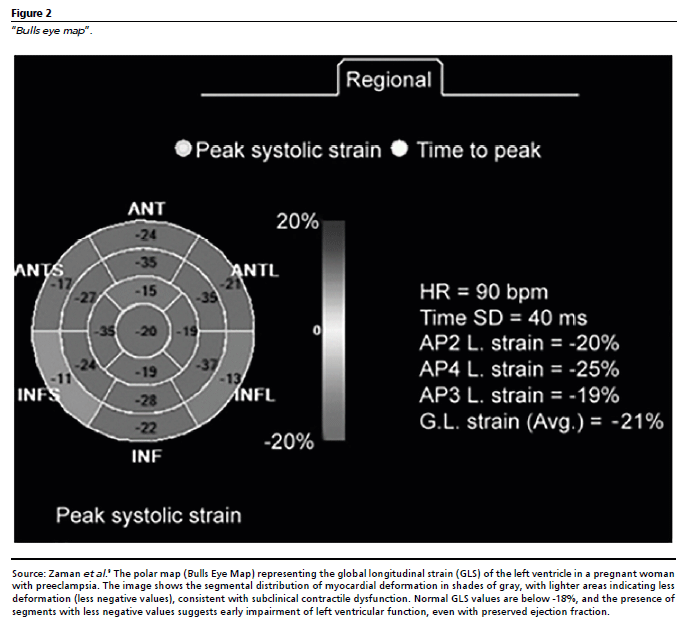
8Although two-dimensional echocardiography is widely used to assess cardiac function through left ventricular ejection fraction, younger patients such as pregnant women, especially those with PE, may present subclinical cardiac alterations and even heart failure with preserved ejection fraction. In this context, an innovative technique, Speckle Tracking Echocardiography (STE), allows the detection of left ventricular dysfunction before the reduction in ejection fraction, through the analysis of myocardial deformation, or Global Longitudinal Strain (GLS). Figure 2 illustrates the GLS "Bulls eye" map of a pregnant woman with preeclampsia.
9 Thus, the objective of this scoping review is to map and synthesize the results of studies that evaluated pregnant women with preeclampsia using STE, comparing them to those of normotensive pregnant women.
MethodsThis is a scoping review of the literature conducted in accordance with the PRISMA-ScR (Preferred Reporting Items for Systematic Reviews and Meta-Analyses Extension for Scoping Reviews) guidelines and following the methodological guidelines of the Joanna Briggs Institute. The research was conducted between April and August 31, 2024, covering the Medline, Embase, Web of Science, BVS, and Cochrane Database of Systematic Reviews databases, in addition to gray literature accessed through Google Scholar, with no restrictions on year of publication or language.
To structure the research question, the PCC (Population/Concept/Context) strategy was adopted, with the following criteria: Population = (Pregnant women diagnosed with preeclampsia), Concept = (Assessment of cardiac function using global longitudinal strain (GLS) measurement by speckle tracking echocardiography (STE)), and Context = (Clinical studies conducted in hospitals, prenatal clinics, and maternity wards). Thus, the guiding question formulated was: "What is the scientific evidence on the cardiac function of pregnant women with preeclampsia assessed with STE compared to normotensive pregnant women?"
The search strategy was structured with the help of a specialized librarian, using a combination of free terms and standardized descriptors (MeSH, Emtree). The search terms included Preeclampsia AND ("Global Longitudinal Strain" OR "Speckle Tracking"). This strategy resulted in the retrieval of 49 articles in the PubMed database as of August 31, 2024.
The study selection process was carried out in two stages: initially, by reading the titles and abstracts, followed by analysis of the full texts. This screening was conducted independently by two authors, who, after the process, checked the results to ensure consistency. Rayyan software was used to facilitate the organization and review of articles, assisting in the identification of duplicates and the categorization of studies. Any disagreements in the selection were discussed until consensus was reached among the reviewers.
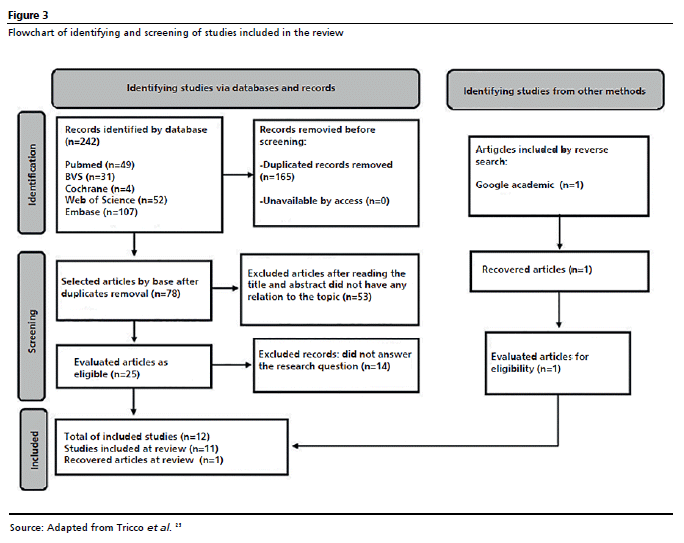
All studies comparing pregnant women with preeclampsia to a control group of normotensive pregnant women using the STE technique to assess cardiac function were included, with no restrictions on year of publication or language, and the PRISMA-ScR 2020 flowchart was prepared (Figure 3). Studies involving other gestational hypertensive disorders (GHD), such as chronic or gestational hypertension, pregnant women with pre-existing heart disease, or those that did not include a control group of normotensive pregnant women were excluded.
ResultsTwelve studies were included, as shown in Figure 3, which met the established inclusion criteria, with a diverse geographical distribution. Of the selected studies, five were conducted in the Americas (four in the United States and one in Brazil), five in Asia (two in China, one in Iran, one in Turkey, and one in India), and two in Europe (one in the United Kingdom and one in Romania), demonstrating the global relevance of preeclampsia, even without the inclusion of studies from Oceania.
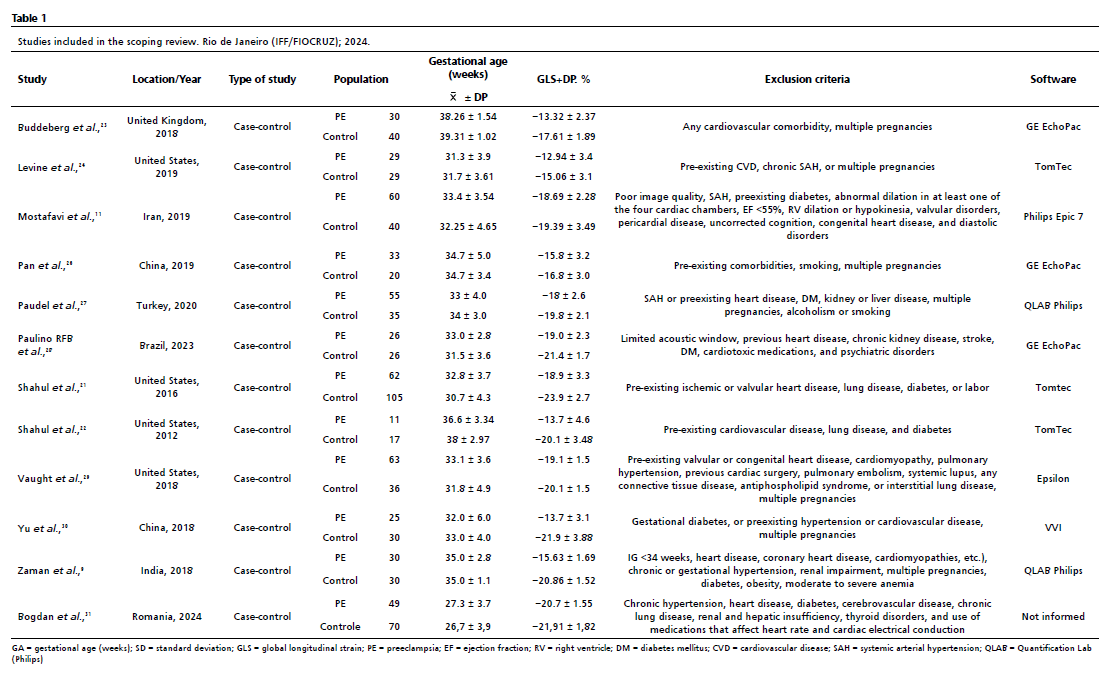
Table 1 presents the characteristics and variables of the studies, including the year of publication, country of origin, methodological design, size of case and control samples, mean gestational age, GLS values of the Table 1 presents the characteristics and variables of the studies, including the year of publication, country of origin, methodological design, case and control sample sizes, mean gestational age, left ventricular GLS values, exclusion criteria, and echocardiogram software used. This detailed distribution allowed for a structured synthesis of the collected data and discussion of the findings.
The total sample of the 12 included studies was 951 pregnant women, of whom 473 belonged to the preeclampsia group and 478 to the control group of normotensive pregnant women. The mean gestational age in the preeclampsia group was 33.28 ± 3.82 weeks, while in the control group it was 32.69 ± 3.44 weeks.
Regarding to the mean GLS value of the left ventricle (GLS-LV), a tendency toward less negative values was observed in the preeclampsia group (-17.34% ± 2.80) compared to the control group (-20.14% ± 2.61). These data suggest subclinical dysfunction associated with PE, but no joint statistical treatment (meta-analysis) was performed.
According to the parameters of most software used, GLS-LV values below -18% (e.g., -17% or values closer to zero) indicate subclinical cardiac dysfunction,
10 suggesting that pregnant women with preeclampsia have subclinical impairment of cardiac function compared to normotensive women.
This finding reinforces the importance of using speckle tracking echocardiography (STE) for early assessment of cardiac function in pregnant women with preeclampsia, allowing the identification of changes that could go unnoticed in conventional examinations.
DiscussionThe main finding of this study is the observation of reduced GLS values via STE in pregnant women with preeclampsia compared to normotensive pregnant women of similar maternal and gestational age, indicating that preeclampsia may negatively affect cardiac function even before clinical symptoms of heart failure manifest.
These findings are consistent with previous studies that demonstrated alterations in the cardiac mechanics in pregnant women with hypertensive disorders when assessed with STE.⁴ For example, Mostafavi
et al.
11 also reported reduced mean GLS values in pregnant women with PE compared to healthy women, while Paudel
et al.
12 found a similar difference of approximately 3 percentage points. All 12 studies pointed to a reduction in myocardial strain in PE, which strongly suggests myocardial dysfunction associated with gestational hypertension.
11-14The International Society for the Study of Hypertension in Pregnancy recommends that all hypertensive pregnant women have the opportunity to participate in research and follow-up studies, reinforcing the importance of exploring diagnostic methods that may benefit these patients.
15 However, there is still a considerable gap in the literature regarding the indication of STE in protocols and recommendations, limiting access to this technology. The inclusion of speckle tracking echocardiography in the prenatal follow-up of pregnant women with preeclampsia could allow for the early diagnosis of subclinical cardiac dysfunction, offering greater safety and assertiveness in the conduct of the multidisciplinary team that monitors these high-risk pregnancies.
15-17LimitationsThe lack of standardization among the different echocardiogram software programs used represents a challenge for the large-scale application of GLS, since the variability between algorithms limits the comparability and generalization of the results. In addition, clinical factors such as gestational age at the time of examination, blood pressure level, body mass index, and use of antihypertensive medications can also influence GLS values. Not all studies included in this review reported these variables in a standardized manner, which compromises the homogeneity of the findings.
Thus, although this review reinforces the usefulness of STE in preeclampsia, there is a need for multicenter studies that promote technical and methodological standardization, validate its application in different geographic and socioeconomic contexts, and establish practical guidelines for its incorporation into high-risk prenatal care.
This study aims to disseminate and expand the use of this diagnostic method, assisting in prenatal management, planning the timing of delivery, and early detection of cardiac changes that can improve maternal-fetal outcomes and the survival of these women.
Final considerationsThis scoping review identified a trend toward less negative GLS values in pregnant women with preeclampsia, suggesting subclinical myocardial dysfunction compared to normotensive women. Although the findings reinforce the importance of STE as a sensitive technique for early detection of cardiac changes, no integrated statistical analyses were performed, which limits the strength of the evidence and points to the need for further research.
The systematic use of STE has the potential to optimize the high-risk prenatal care management, support the determination of the optimal time for delivery, and contribute to the early detection of cardiac changes that can improve maternal and fetal outcomes. However, additional multicenter studies are essential to standardize the technique, confirm its accuracy in different contexts, and assess whether routine implementation of this test can, in fact, positively impact maternal cardiovascular health.
18-20References1. Moors S, van Oostrum NHM, Rabotti C, Long X, Westerhuis MEMH, Kemps HMC,
et al. Speckle Tracking Echocardiography in Hypertensive Pregnancy Disorders: A Systematic Review. Obstet Gynecol Surv. 2020; 75(8): 497-509.
2. O'Driscoll JM, Giorgione V, Edwards J, Sharma R, Thilaganathan B. Myocardial Mechanics in Hypertensive Disorders of Pregnancy: a Systematic Review and Meta-Analysis. Hypertension. 2022; 79: 391-8.
3. Grandi SM, Filion KB, Yoon S, Ayele HT, Doyle CM, Hutcheon JA,
et al. Cardiovascular Disease-Related Morbidity and Mortality in Women with a History of Pregnancy Complications. Circulation. 2019; 19; 139 (8): 1069-79.
4. Castleman JS, Ganapathy R, Taki F, Lip GY, Steeds RP, Kotecha D. Echocardiographic Structure and Function in Hypertensive Disorders of Pregnancy: A Systematic Review. Circ Cardiovasc Imaging. 2016; 9 (9).
5. Davis M, Arendt K, Bello N, Brown H, Briller J, Epps K,
et al. Team-based care of women with cardiovascular disease from pre-conception through pregnancy and postpartum: JACC focus seminar 1/5. J Am Coll Cardiol. 2021; 77 (14) 1763-77.
6. Thilaganathan B, Kalafat E. Cardiovascular system in preeclampsia and beyond. Hypertension. 2019; 73 (3): 522-31.
7. Ramlakhan KP, Johnson MR, Roos-Hesselink JW. Pregnancy and cardiovascular disease. Nat Rev Cardiol. 2020; 17 (11): 718-31.
8. Guida JPS, Andrade BG, Pissinatti LGF, Rodrigues BF, Hartman CA, Costa ML. Prevalence of Preeclampsia in Brazil: An Integrative Review. Rev Bras Ginecol Obst. 2022; 44 (7): 686-91.
9. Zaman N, Abdali N, Asif M, Tiwari P, Razi MM. Maternal cardiovascular hemodynamics in preeclampsia: Echocardiographic assessment and evaluation of subclinical left ventricular dysfunction. J South Asian Fed Obstet Gynaecol. 2018; 10 (4S2): 400-4.
10. Yang H, Wright L, Negishi T, Negishi K, Liu J, Marwick TH. Research to Practice: Assessment of Left Ventricular Global Longitudinal Strain for Surveillance of Cancer Chemotherapeutic-Related Cardiac Dysfunction. J Am Coll Cardiol Img. 2018; 11 (8) 1196-201.
11. Mostafavi A, Tase Zar Y, Nikdoust F, Tabatabaei SA. Comparison of left ventricular systolic function by 2D speckle-tracking echocardiography between normal pregnant women and pregnant women with preeclampsia. J Cardiovasc Thorac Res. 2019; 11 (4): 309-13.
12. Paudel A, Tigen K, Yoldemir T, Guclu M, Yildiz I, Cincin A,
et al. The evaluation of ventricular functions by speckle tracking echocardiography in preeclamptic patients. Int J Cardiovasc Imaging. 2020; 36 (9): 1689-94.
13. Jiang L, Liang W, Xie R, Fang X, Liu D, Zhang M,
et al. Assessment of left ventricular structure and function in preeclampsia subtypes by multimodal echocardiography. J Obstet Gynaecol Res. 2023; 49 (8): 2031-9.
14. Brandt Y, Ghossein-Doha C, Gerretsen SC, Spaanderman MEA, Kooi ME. Noninvasive cardiac imaging in formerly preeclamptic women for early detection of subclinical myocardial abnormalities: A 2022 update. Biomolecules. 2022; 12 (3): 415.
15. Magee LA, Brown MA, Hall DR, Gupte S, Hennessy A, Karumanchi SA,
et al. The 2021 International Society for the Study of Hypertension in Pregnancy classification, diagnosis & management recommendations for international practice. Pregnancy Hypertension. 2022; 27: 148-69.
16. Gibbone E, Wright A, Vallenas Campos R, Sanchez Sierra A, Nicolaides KH, Charakida M. Maternal cardiac function at 19-23 weeks' gestation in prediction of pre-eclampsia. Ultrasound Obstet Gynecol. 2021; 57 (5): 739-47.
17. Boardman H, Lamata P, Lazdam M, Verburg A, Siepmann T, Upton R,
et al. Variations in cardiovascular structure, function, and geometry in midlife associated with a history of hypertensive pregnancy. Hypertension. 2020; 75 (6): 1542-50.
18. Kräker K, Schütte T, O'Driscoll J, Birukov A, Patey O, Herse F,
et al. Speckle tracking echocardiography: New ways of translational approaches in preeclampsia to detect cardiovascular dysfunction. Int J Mol Sci. 2020; 21 (3): 1162.
19. Lo CCW, Lo ACQ, Leow SH, Fisher G, Corker B, Batho O,
et al. Future Cardiovascular Disease Risk for Women with Gestational Hypertension: A Systematic Review and Meta-Analysis. J Am Heart Assoc. 2020; 9 (13).
20. Yu L, Zhou Q, Peng Q, Yang Z. Left ventricular function of patients with pregnancy‐induced hypertension evaluated using velocity vector imaging echocardiography and N‐terminal pro‐brain natriuretic peptide. Echocardiography. 2018; 35 (4): 459-66.
21. Shahul S, Medvedofsky D, Wenger JB, Nizamuddin J, Brown S, Bajracharya S,
et al. Circulating antiangiogenic factors and myocardial dysfunction in hypertensive disorders of pregnancy. Hypertension. 2016; 67 (6): 1273-80.
22. Shahul S, Rhee J, Hacker MR, Gulati G, Mitchell JD, Hess P,
et al. Subclinical left ventricular dysfunction in preeclamptic women with preserved left ventricular ejection fraction: a 2D speckle-tracking imaging study. Circ Cardiovasc Imaging. 2012; 5 (6): 734-9.
23. Buddeberg BS, Sharma R, O'Driscoll JM, Kaelin Agten A, Khalil A, Thilaganathan B. Cardiac maladaptation in term pregnancies with preeclampsia. Pregnancy Hypertens. 2018; 13: 198-203.
24. Levine LD, Lewey J, Koelper N, Downes KL, Arany Z, Elovitz MA,
et al. Persistent cardiac dysfunction on echocardiography in African American women with severe preeclampsia. Pregnancy Hypertens. 2019; 17: 127-32.
25. Tricco AC, Lillie E, Zarin W, O'Brien KK, Colquhoun H, Levac D,
et al. PRISMA Extension for Scoping Reviews (PRISMA-ScR): Checklist and Explanation. Ann Intern Med. 2018 Oct; 169 (7): 467-73.
26. Pan G, Chen D, Xu L, Dong X, You L, Zhu Z,
et al. Cardiac dysfunction in women with severe preeclampsia detected by tissue Doppler and speckle‑tracking echocardiography. Int J Clin Exp Med. 2019; 12 (7): 9245-50.
27. Paudel A, Tigen K, Yoldemir T, Guclu M, Yildiz I, Cincin A,
et al. The evaluation of ventricular functions by speckle tracking echocardiography in preeclamptic patients. Int J Cardiovasc Imaging. 2020; 36 (9): 1689-94.
28. Paulino RFB. Comparação do Strain Global Longitudinal pelo Ecocardiograma em Gestantes com e sem Pré‑eclâmpsia [dissertação]. Belo Horizonte (MG): Universidade Federal de Minas Gerais; 2023.
29. Vaught AJ, Kovell LC, Szymanski LM, Mayer SA, Seifert SM, Vaidya D,
et al. Acute cardiac effects of severe pre-eclampsia. J Am Coll Cardiol. 2018; 72 (1): 1-11.
30. Yu L, Zhou Q, Peng Q, Yang Z. Left ventricular function of patients with preeclampsia using speckle‑tracking imaging and brain natriuretic peptide. Echocardiography. 2018; 35 (4): 459-66.
31. Bogdan C, Apostol A, Ivan VM, Sandu OE, Petre I, Petre I,
et al. Autonomic dysfunction and cardiac performance in pregnant women with hypertensive disorders: a comparative study using heart rate variability and global longitudinal strain. Life (Basel). 2024 Ago; 14 (8): 1039.
Authors' contributionSalimena EDW: Conception; Investigation; Methodology; Writing – Original Draft; Writing – Review and Editing.
Salimena ADW, Laufer EA, and Gheller TL: Data Curation; Formal Analysis; Software.
Carvalho AMCX: Visualization; Writing – Review and Editing. De Sá RAM: Supervision.
All authors approved the final version of the article and declared no conflict of interest.
Data AvailabilityThe entire dataset supporting the results of this study was published in the article itself and registered in the Open Science Framework (OSF) in order to maintain transparency and facilitate access to the data for other researchers (
https://doi.org/10.17605/OSF.IO/H7VQR).
Received on November 15, 2024
Final version presented on September 22, 2025
Approved on Septemeber 23, 2025
Associated Editor: Karla Bomfim


 ; Anabelle Dias Winter Salimena2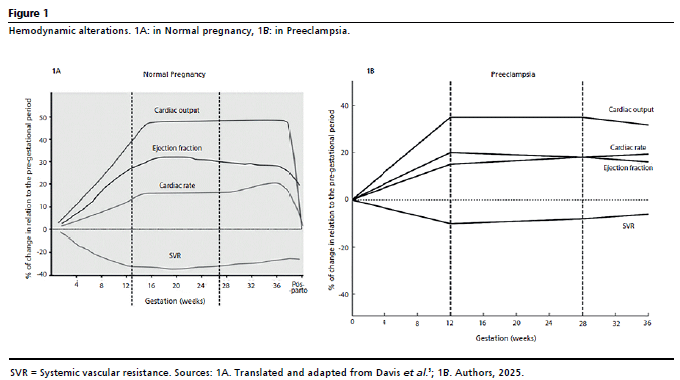







 Ler em português
 Download PDF
 Imprimir
 Enviar este artigo por email
 Como citar este artigo
 Enviar um comentário
 Mendeley
 Pocket
 Compartilhar no Facebook
 Compartilhar no Twitter