IntroductionVaccination is one of the most effective and cost-effective strategies for preventing infectious diseases, substantially contributing to the reduction of morbidity and mortality worldwide.
1 During pregnancy, immunization plays an important role in protecting both the woman and the newborn, including the passive transfer of maternal antibodies through the placenta and breastfeeding, which may reduce the risk of infections during the first months of life.
2,3In Brazil, the National Immunization Program (PNI), coordinated by the Ministry of Health, recommends the administration of specific vaccines during prenatal care, including diphtheria and tetanus vaccine (dT), tetanus, diphtheria, and acellular pertussis vaccine (Tdap), hepatitis B vaccine, influenza vaccine, and covid-19 vaccine, according to vaccination status and guidelines in force during pregnancy.
4 During the data collection period of this study (2023), covid-19 vaccination was recommended for pregnant women as an individual and collective protection measure, considering the increased risk of complications associated with respiratory infection during pregnancy; it was later incorporated into the updated immunization schedule in 2025.
5Monitoring vaccination status during prenatal care is a responsibility of healthcare professionals, who play a central role in assessing immunization status and counseling pregnant women regarding the benefits and safety of recommended vaccines. The quality of such guidance may influence maternal adherence and completion of the vaccination schedule.
6Pregnancy involves physiological and immunological adaptations that may increase vulnerability to certain infections and their complications, particularly respiratory infections such as influenza and covid-19.
7 Evidence indicates that maternal infections during pregnancy may be associated with adverse outcomes, including prematurity, intrauterine growth restriction, and increased neonatal morbidity.
8In recent years, vaccine hesitancy has been recognized as one of the challenges for immunization programs. This phenomenon is understood as a complex behavior influenced by individual, social, and contextual factors, which may result in delayed acceptance or refusal of vaccination even when services are available.
3,9 Among pregnant women, factors such as risk perception, confidence in vaccines, access to healthcare services, and quality of information received may influence adherence to the vaccination schedule.
10,11In this context, evaluating adherence to vaccination schedules during pregnancy and identifying factors associated with non-vaccination are relevant to support improvements in prenatal care and immunization strategies. Therefore, the aim of this study was to estimate the prevalence of adherence to the complete vaccination schedule recommended for pregnant women by the National Immunization Program of the Brazilian Ministry of Health and to identify reasons for non-vaccination in a referral maternity hospital in Southern Brazil.
MethodsThis study was approved by the Research Ethics Committee of the University of Southern Santa Catarina under opinion number 6,157,332, CAAE 70721423.1.0000.026, on July 2, 2023.
This was an observational epidemiological study with a cross-sectional design, conducted according to the STROBE guidelines for observational studies.
The study was carried out in the maternity ward of a referral hospital located in Southern Brazil between July and December 2023.
Women aged 18 years or older who had undergone vaginal or cesarean delivery, were in adequate clinical condition according to the healthcare team evaluation, were hospitalized in the rooming-in ward, and agreed to participate by signing the Informed Consent Form were included. Women with cognitive impairment, as assessed by the healthcare team, and those admitted to intensive care units were excluded.
The sample size was calculated based on the number of births registered at the institution in 2022 (n=3,108). Considering an estimated prevalence of 50%, a margin of error of 5%, and a 95% confidence level, the minimum sample size obtained was 342 postpartum women. The finite population correction formula was applied using OpenEpi software (version 3.1). Participants were consecutively selected according to availability in the rooming-in ward.
Interviews were conducted by the researchers at appropriate moments after delivery and with authorization from the healthcare team. A structured questionnaire developed by the authors was used, including sociodemographic variables (age, race/skin color, educational level, marital status), obstetric variables (number of pregnancies, children and abortions, prenatal care attendance, place of care, number of visits, pregnancy risk, type of delivery, gestational age), and vaccination-related variables (receipt of counseling, vaccination schedule completed, reasons for incomplete schedule or non-vaccination, adverse reactions, intention to vaccinate the newborn). Prenatal cards and electronic medical records were reviewed to confirm the information provided by participants.
Three main outcomes were analyzed:
1. Incomplete vaccination schedule considering all recommended immunobiologicals;
2. Incomplete covid-19 vaccination schedule – two doses during pregnancy;
3. Incomplete vaccination schedule for other immunobiologicals, excluding covid-19 and influenza.
The third outcome (incomplete vaccination schedule for other immunobiologicals, excluding covid-19 and influenza) was defined post hoc after observing lower adherence to covid-19 and influenza vaccines among participants.
Maternal age was dichotomized into 18–35 years and >35 years based on pregnancy risk related to maternal age. Educational level was categorized into 0–8 years and >8 years of schooling.
Categories related to absent or non-applicable information, including "undefined," "not performed," "does not know," "not applicable," and "no response," were maintained in the descriptive tables as originally recorded. For bivariate and multivariate analyses, these categories were treated as missing or non-applicable data and excluded from analyses, considering only observations with valid information for each variable.
Possible recall bias and inaccuracies in responses were minimized through cross-checking information with official documents (prenatal card and medical records).
Data were analyzed using SPSS software, version 18.0 (SPSS Inc., Chicago, IL, USA). Initially, descriptive analyses of study variables were performed. Quantitative variables were described using measures of central tendency and dispersion, while qualitative variables were presented as absolute and relative frequencies.
Bivariate analysis was conducted to assess associations between vaccination schedules (complete and incomplete) and sociodemographic and gestational variables using Pearson's chi-square test or Fisher's exact test, when appropriate.
To estimate measures of association, crude and adjusted prevalence ratios (PR) and their respective 95% confidence intervals (95%CI) were calculated using Poisson regression models with robust variance. Independent multivariate models were constructed for each analyzed outcome: overall complete vaccination schedule, specific covid-19 vaccination schedule, and vaccination schedule excluding covid-19 and influenza.
Candidate variables for the multivariate model were selected based on p<0.20 in the bivariate analysis using Poisson regression with robust variance, ensuring methodological consistency between the bivariate and adjusted models. The significance level adopted in all analyses was 5%.
Results
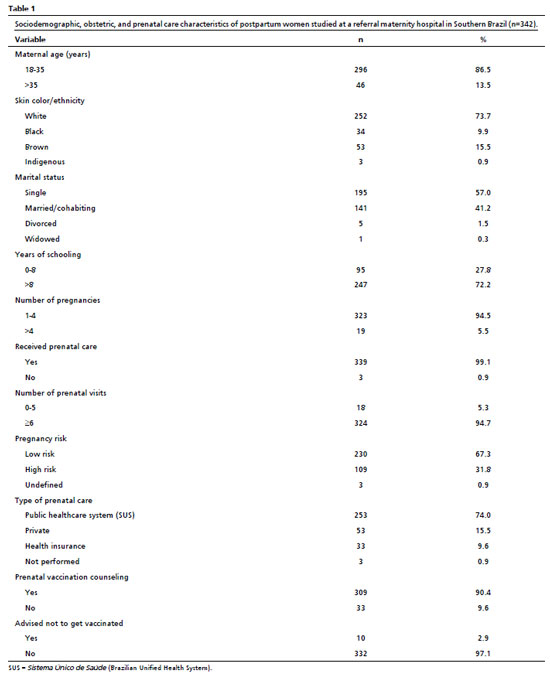
A total of 342 postpartum women were included, with a mean age of 28.4±5.8 years (minimum 18 and maximum 44 years). Table 1 describes the sociodemographic and obstetric characteristics of the participants. Of the total, 146 (42.7%) were primiparous and 266 (77.8%) had never experienced abortion.
Regarding vaccine adherence, the covid-19 vaccine showed the lowest rate of complete coverage (23.4%; n=80), as shown in Table 2. Table 3 details the reported reasons for vaccine refusal in general, with fear being the main reason for non-vaccination. When asked which immunizations caused the greatest concern, participants highlighted the covid-19 vaccine (47.7%; n=163) and the influenza vaccine (9.9%; n=34).
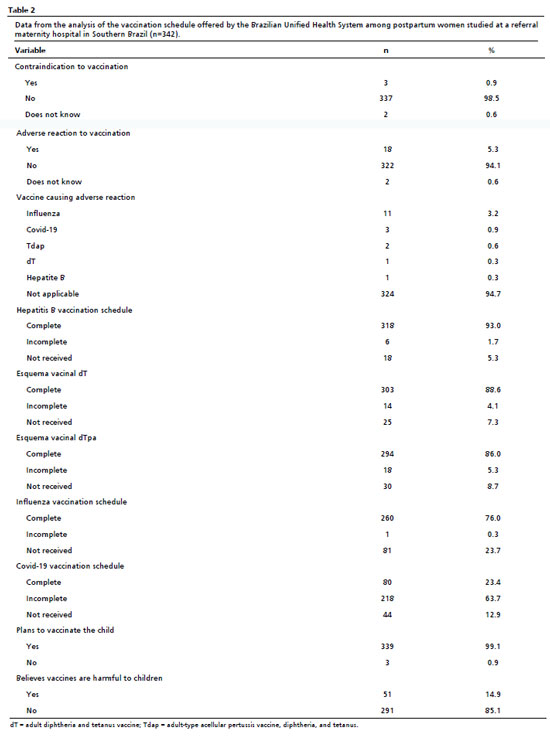
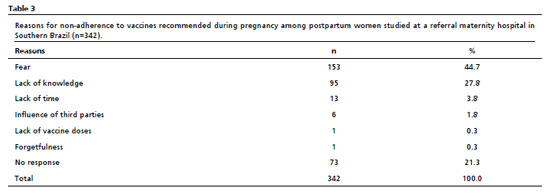
Table 4 presents the bivariate analysis between independent variables and the three outcomes considered in the study. Regarding incomplete vaccination schedules for all immunizations recommended during pregnancy, a statistically significant association was observed with younger maternal age. Concerning covid-19 vaccination, the only variable significantly associated with incomplete vaccination schedule was also maternal age: younger postpartum women showed lower adherence to this immunization. For the outcome related to incomplete vaccination schedule for other immunizations — excluding covid-19 and influenza — women without a partner and those with fewer prenatal visits had a higher frequency of incomplete vaccination. Receiving guidance to get vaccinated was a protective factor against incomplete vaccination schedules.
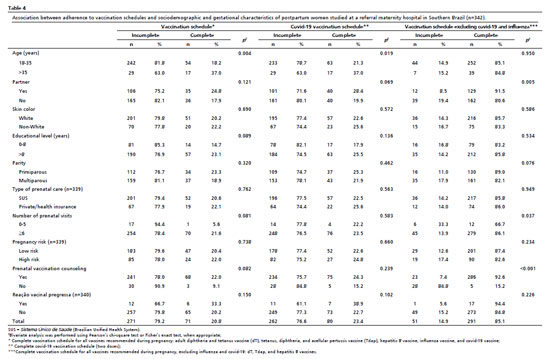
Table 5 presents crude and adjusted prevalence ratios (PR) for the three outcomes. Maternal age below 35 years remained an independent factor associated with non-adherence to the complete vaccination schedule. In contrast, receiving counseling during prenatal care regarding the importance of vaccination was a protective factor, independently associated with higher vaccination coverage for immunizations excluding covid-19 and influenza.
DiscussionThe present study analyzed adherence to the vaccination schedule recommended by the Brazilian Ministry of Health for pregnant women, with emphasis on the covid-19 vaccine. The sample consisted predominantly of young, White, single women with high educational levels. It is also noteworthy that most participants were multiparous, attended an adequate number of prenatal visits, and that the regional context may have influenced access to healthcare services, although this was not directly measured in the present study.
Less than 10% of postpartum women reported not having received vaccination counseling, and reports of adverse reactions were infrequent, which would initially suggest a favorable scenario for vaccine adherence. However, the data revealed a prevalence of only 20.8% complete adherence to the recommended vaccination schedule, which is concerning. The absence of a complete vaccination schedule may indicate a scenario of vaccine hesitancy, whose causes should be investigated.
12,13Vaccination counseling during prenatal care was independently associated with vaccine adherence, both for the complete schedule and for the schedule excluding covid-19 and influenza vaccines. This finding is consistent with the literature showing that healthcare professionals remain the most trusted sources for vaccine-related decision-making, especially in the community setting.
1,2Covid-19 vaccine coverage was the lowest among all immunizations analyzed, which has also been observed in other countries.
14-17 A global study on vaccine acceptance in 19 countries showed that Brazil had an estimated hesitancy rate of 56.3% for the covid-19 vaccine among children.
14 A study conducted in South Korea in 2021 with 436 pregnant and postpartum women found a vaccination rate of 26.6%, similar to that observed in the present study.
15 In New York (USA), only 13.6% of pregnant women accepted the vaccine during prenatal care.
16 Here, as in those studies, younger pregnant women showed lower adherence to the complete vaccination schedule recommended during pregnancy compared with older postpartum women.
Pregnant women are particularly vulnerable to severe covid-19 due to physiological changes during pregnancy that affect the immune, respiratory, and cardiovascular systems.
7 The possibility of vertical transmission remains incompletely understood, although reports of fetal loss and infected neonates have been described.
18Fear and lack of knowledge were the main reasons for refusal of the covid-19 vaccine among participants. Vaccine hesitancy, intensified during the pandemic, was strongly related to misinformation spread through social media. A study analyzing online posts found that 91% of information regarding the covid-19 vaccine consisted of rumors without scientific support.
19 In Brazil, this scenario worsened with the spread of fake news and the strengthening of anti-vaccine movements. Many pregnant women fear adverse effects on the fetus. However, a national study involving 582 reports of adverse events in vaccinated pregnant women showed that 82% of cases were not severe.
20 An English study found no differences in obstetric outcomes between vaccinated and unvaccinated postpartum women, although long-term follow-up of infants was recommended.
21 A recent systematic review indicated that vaccination during pregnancy reduces SARS-CoV-2 infection without increasing maternal or neonatal risks, in addition to reducing prematurity, stillbirths, and neonatal intensive care admissions.
22 Therefore, vaccines approved by regulatory agencies offer benefits that clearly outweigh the risks, and disease-related outcomes are more severe than vaccine adverse events.
23Vaccines against influenza, hepatitis B, tetanus, diphtheria, and pertussis showed higher adherence, possibly because they have long been included in the vaccination schedule, resulting in greater familiarity and public confidence regarding their safety and effectiveness. Even so, pregnant women with incomplete or absent vaccination schedules for these immunizations were identified, which may reduce maternal and neonatal protection against vaccine-preventable diseases.
24,25An important finding was the high proportion of postpartum women who intended to vaccinate their children, indicating confidence in the National Immunization Program — except specifically regarding the covid-19 vaccine. Nevertheless, 14.9% of participants believed that some vaccines could harm the fetus when administered during pregnancy, revealing the persistence of myths and unfounded beliefs.
Among the limitations of this study is the fact that it was conducted in a single hospital center, which may compromise the generalizability of the results to other populations of Brazilian pregnant women. In addition, the cross-sectional nature of the investigation prevents follow-up of vaccination outcomes in the medium and long term. The sample size calculation was based on a finite population and was appropriate for estimating the overall prevalence of the outcome. However, the study included multiple outcomes and multivariate analyses, for which no specific statistical power calculation was performed.
Additionally, some strata included a small number of participants, which may have increased estimate instability and reduced the precision of confidence intervals. Therefore, findings should be interpreted with caution, particularly analyses involving less frequent subgroups.
Despite these limitations, the present study contributes significantly to discussions on vaccine hesitancy among pregnant women, a relevant issue for maternal health, prenatal care, and immunization policies, using a representative sample from the service and verification instruments such as prenatal cards and medical records.
The findings highlight the need for effective health communication strategies aimed at increasing awareness regarding the safety and importance of vaccines during pregnancy. Such strategies should include post-vaccination surveillance, expanded training for healthcare professionals, and public educational campaigns, especially targeting younger populations. Transparency and evidence-based communication are essential to address vaccine hesitancy and protect maternal and child health.
Adherence to the vaccination schedule recommended for pregnant women by the National Immunization Program was lower than expected, with particularly low prevalence of covid-19 vaccination.
In the adjusted models, younger maternal age was associated with a higher prevalence of incomplete vaccination schedules. Vaccination counseling proved to be a protective factor against incomplete overall vaccination schedules and against incomplete schedules excluding covid-19 and influenza vaccines. The other investigated variables showed no statistically significant association after adjustment.
References1. World Health Organization (WHO). Ten threats to global health in 2019: Vaccine hesitancy. Geneva: WHO; 2019. [Internet]. [access in 2025 Jul 15]. Available from:
https://www.who.int/news-room/spotlight/ten-threats-to-global-health-in-2019/2. Arora M, Lakshmi R. Vaccines - safety in pregnancy. Best Pract Res Clin Obstet Gynaecol. 2021 Oct; 76: 23-40. doi: 10.1016/j.bpobgyn.2021.02.002
3. Rand CM, Olson-Chen C. Maternal Vaccination and Vaccine Hesitancy. Pediatr Clin North Am. 2023 Apr; 70 (2): 259-69. doi: 10.1016/j.pcl.2022.11.004.
4. Brasil. Ministério da Saúde. Saiba quais vacinas devem ser administradas durante a gestação. Brasília (DF): Ministério da Saúde; 2022. [Internet]. [access in 2023 Jun 7]. Available from:
https://www.gov.br/pt-br/noticias/saude-e-vigilancia-sanitaria/2022/11/saiba-quais-vacinas-devem-ser-administradas-durante-a-gestacao5. Ministério da Saúde (BR). Secretaria de Vigilância em Saúde e Ambiente. Departamento do Programa Nacional de Imunizações. Calendário Nacional de Vacinação ano 2025 - ciclo de vida - gestante (da concepção ao nascimento). Brasília (DF): Ministério da Saúde; 2025. [Internet]. [access in 2025 Jul 15]. Available from:
https://www.gov.br/saude/pt-br/vacinacao/calendario6. Moniz MH, Beigi RH. Maternal immunization: clinical experiences, challenges, and opportunities in vaccine acceptance. Hum Vaccin Immunother. 2014; 10 (9): 2562-70. doi: 10.4161/21645515.2014.970901
7. Wastnedge EAN, Reynolds RM, van Boeckel SR, Stock SJ, Denison FC, Maybin JA,
et al. Pregnancy and COVID-19. Physiol Rev. 2021 Jan; 101 (1): 303-18. doi: 10.1152/physrev.00024.2020
8. Beigi RH. Emerging infectious diseases in pregnancy. Obstet Gynecol. 2017 May; 129 (5): 896-906. doi: 10.1097/AOG.0000000000001978
9. Kumar V, Patil Y, Jain R, Bhanushali N, Gaonkar K, Ciby J. COVID-19 vaccination acceptance and adherence among pregnant and lactating high-risk group individuals of Maharashtra State, India. J Educ Health Promot. 2023 Jan; 12: 36. doi: 10.4103/jehp.jehp_204_22
10. Goncu Ayhan S, Oluklu D, Atalay A, Menekse Beser D, Tanacan A, Moraloglu Tekin O,
et al. COVID-19 vaccine acceptance in pregnant women. Int J Gynaecol Obstet. 2021 Aug; 154 (2): 291-6. doi: 10.1002/ijgo.13713
11. Chaubey I, Vijay H, Govindaraj S, Babu H, Cheedarla N, Shankar EM,
et al. Impact of COVID-19 vaccination on pregnant women. Pathogens. 2023 Mar 9; 12 (3): 431. doi: 10.3390/pathogens12030431
12. Oliveira RAD, Duarte CMR, Pavão ALB, Viacava F. Barreiras de acesso aos serviços em cinco Regiões de Saúde do Brasil: percepção de gestores e profissionais do Sistema Único de Saúde. Cad Saúde Pública. 2019 Oct; 35 (11): e00120718.
https://doi.org/10.1590/0102-311X0012071813. Michel A, Fontenot H. Adequate prenatal care: an integrative review. J Midwifery Womens Health. 2023 Mar; 68 (2): 233-47. doi: 10.1111/jmwh.13459
14. Lazarus JV, Ratzan SC, Palayew A, Gostin LO, Larson HJ, Rabin K,
et al. A global survey of potential acceptance of a COVID-19 vaccine. Nat Med. 2021 Feb; 27 (2): 225-8. doi: 10.1038/s41591-020-1124-9
15. Yoon H, Choi BY, Seong WJ, Cho GJ, Na S, Jung YM,
et al. COVID-19 vaccine acceptance during pregnancy and influencing factors in South Korea. J Clin Med. 2022 Sep 28; 11 (19): 5733. doi: 10.3390/jcm11195733
16. Odedokun T, Marquez R, Thakkar M, Dinglas C, Kady DE. COVID-19 vaccine acceptance in pregnancy. Am J Perinatol. 2024; 41 (S01): e617-22. doi: 10.1055/s-0042-1757275
17. Hunter M, Moodley J, Moran N. Perspectives on COVID-19 vaccination for pregnant women in South Africa. Afr J Prim Health Care Fam Med. 2021 Jul; 13 (1): 2998. doi: 10.4102/phcfm.v13i1.2998
18. Sutton D, Bertozzi-Villa C, Lasky J, Fuchs K, Friedman A. Outcomes and epidemiology of COVID-19 infection in the obstetric population. Semin Perinatol. 2020 Nov; 44 (7): 151283. doi: 10.1016/j.semperi.2020
19. Islam MS, Kamal AM, Kabir A, Southern DL, Khan SH, Hasan SMM,
et al. COVID-19 vaccine rumors and conspiracy theories: the need for cognitive inoculation against misinformation to improve vaccine adherence. PLoS One. 2021 May 12; 16 (5): e0251605. doi: 10.1371/journal.pone.0251605
20. Kobayashi CD, Porto VBG, Nóbrega MEB, Cabral CM, Barros TD, Martins CMR. Adverse events related to COVID-19 vaccines reported in pregnant women in Brazil. Rev Bras Ginecol Obstet. 2022 Sep; 44 (9): 821-9. doi: 10.1055/s-0042-1755461
21. Blakeway H, Prasad S, Kalafat E, Heath PT, Ladhani SN, Le Doare K,
et al. COVID-19 vaccination during pregnancy: coverage and safety. Am J Obstet Gynecol. 2022 Feb; 226 (2): 236.e1-14. doi: 10.1016/j.ajog.2021.08.007
22. Rahmati M, Yon DK, Lee SW, Butler L, Koyanagi A, Jacob L,
et al. Effects of COVID-19 vaccination during pregnancy on SARS-CoV-2 infection and maternal and neonatal outcomes: a systematic review and meta-analysis. Rev Med Virol. 2023 May; 33 (3): e2434. doi: 10.1002/rmv.2434
23. Charuta A, Smuniewska M, Woźniak Z, Paziewska A. Effect of COVID-19 on pregnancy and neonate's vital parameters: a systematic review. J Pregnancy. 2023 May; 2023: 3015072. doi: 10.1155/2023/3015072
24. Silva TPRD, Gomes CS, Carmo ASD, Mendes LL, Rezende EM, Velasquez-Melendez G,
et al. Spatial analysis of vaccination against hepatitis B in pregnant women in an urban Brazilian area. Ciên Saúde Colet. 2021 Mar; 26 (3): 1173-82. doi: 10.1590/1413-81232021263.28262018
25. Guerra AB, Siravenha LQ, Laurentino RV, Feitosa RNM, Azevedo VN, Vallinoto ACR,
et al. Seroprevalence of HIV, HTLV, CMV, HBV and rubella virus infections in pregnant adolescents who received care in the city of Belém, Pará, Northern Brazil. BMC Pregnancy Childbirth. 2018 May 16; 18 (1): 169. doi: 10.1186/s12884-018-1753-x
Authors' contributions Fortunato MAA and Fernandes ACG: study design, data collection, manuscript writing. Marin DFD: manuscript writing and review. Traebert E, Traebert J e Trevisol DJ: critical review of the manuscript, statistical analysis. Schuelter-Trevisol F: study design, supervision and guidance throughout all study phases, statistical analysis, manuscript review, and final approval of the manuscript. All authors approved the final version of the article and declare no conflicts of interest.
Use of generative artificial intelligence The generative artificial intelligence tool ChatGPT (OpenAI, Pro version) was used to translate the title and abstract into English.
Data availability The database and analysis codes used in this research are available at:
https://1drv.ms/u/c/25a599608230e6c6/EcbmMIJgmaUggCUuQQAAAAABuXntyhQYX3KU7rY1wlXM5g?e=e5FNmO.
Received on February 14, 2025 Final version submitted on April 29, 2026 Approved on May 11, 2026
Associate Editor: Melania Amorim


 ; Ana Carolina Goulart Fernandes2








 Ler em português
 Download PDF
 Imprimir
 Enviar este artigo por email
 Como citar este artigo
 Enviar um comentário
 Mendeley
 Pocket
 Compartilhar no Facebook
 Compartilhar no Twitter